

Water, a fundamental resource for life, often requires advanced treatment to meet purity standards. In the realm of water treatment, PAMPolymer Anionic Polyacrylamide Flocculant emerges as a scientifi… Water, a fundamental resource for life, often requires advanced treatment to meet purity standards. In the realm of water treatment, PAMPolymer Anionic Polyacrylamide Flocculant emerges as a scientific marvel, revolutionizing the way we approach water purification. In this blog post, we’ll unravel the intricate science behind PAMPolymer Anionic Polyacrylamide Flocculant, exploring its composition, working principles, and transformative effects on water. Decoding the Composition of PAMPolymer Anionic Polyacrylamide Flocculant PAMPolymer Anionic Polyacrylamide Flocculant is a polymer, specifically a type of polyacrylamide with anionic charge characteristics. Its molecular structure, comprising long chains of repeating units, plays a pivotal role in its function. The “anionic” nature indicates a negative charge, which becomes instrumental in the flocculation process. The flocculant is typically supplied in the form of a dry, granular powder. This powder, when mixed with water, forms a solution ready for application in various water treatment scenarios. The controlled synthesis of the polymer ensures consistency and effectiveness in addressing impurities in water. The Flocculation Process:
Grade: Medium anionic charge, high molecular weight
Main use: mining and industrial solid-liquid separation
Water, a fundamental resource for life, often requires advanced treatment to meet purity standards. In the realm of water treatment, PAMPolymer Anionic Polyacrylamide Flocculant emerges as a scientifi... Water, a fundamental resource for life, often requires advanced treatment to meet purity standards. In the realm of water treatment, PAMPolymer Anionic Polyacrylamide Flocculant emerges as a scientific marvel, revolutionizing the way we approach water purification. In this blog post, we'll unravel the intricate science behind PAMPolymer Anionic Polyacrylamide Flocculant, exploring its composition, working principles, and transformative effects on water. Decoding the Composition of PAMPolymer Anionic Polyacrylamide Flocculant PAMPolymer Anionic Polyacrylamide Flocculant is a polymer, specifically a type of polyacrylamide with anionic charge characteristics. Its molecular structure, comprising long chains of repeating units, plays a pivotal role in its function. The "anionic" nature indicates a negative charge, which becomes instrumental in the flocculation process. The flocculant is typically supplied in the form of a dry, granular powder. This powder, when mixed with water, forms a solution ready for application in various water treatment scenarios. The controlled synthesis of the polymer ensures consistency and effectiveness in addressing impurities in water. The Flocculation Process: Bringing Science to Water Treatment The science behind PAMPolymer Anionic Polyacrylamide Flocculant revolves around the phenomenon of flocculation. Flocculation is a crucial step in water treatment, where destabilization of
| Product Category | Anionic Polyacrylamide Flocculant |
| Formula / Type | (C3H5NO)n anionic copolymer |
| CAS No. | 9003-05-8 |
| Grade | Medium anionic charge, high molecular weight |
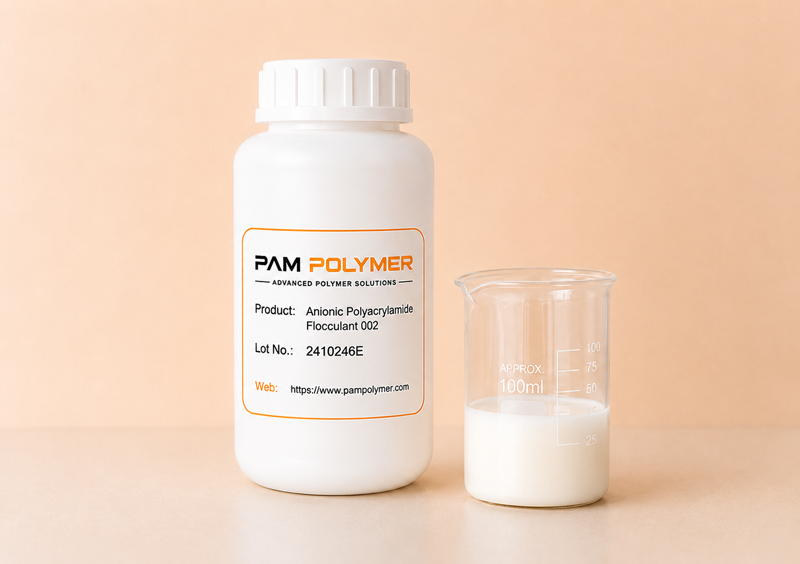
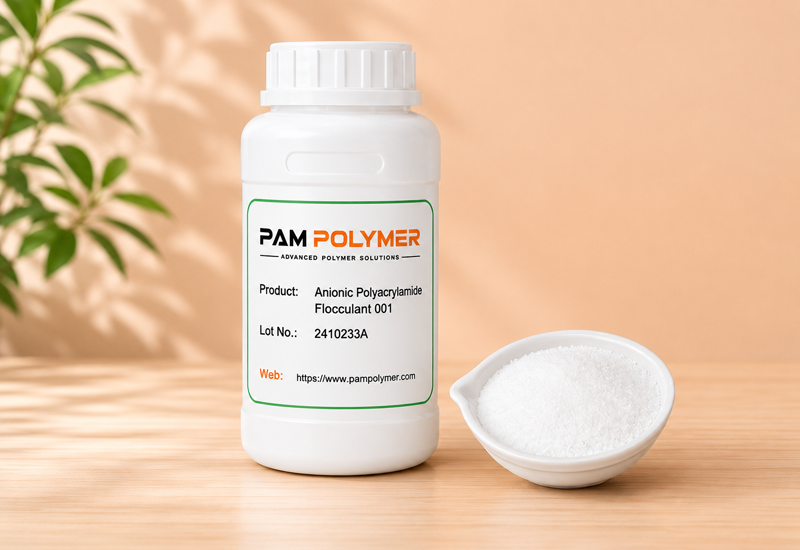
| Appearance | white powder or emulsion |
| Application | mining and industrial solid-liquid separation |
| Packaging | 25 kg bags, drums or IBC tanks |
Products | Product Code | Anionic Charge | Molecular Weight |
Anionic PAM Powder | PAMPolymer 9012 | Slight | Medium |
Anionic PAM Powder | PAMPolymer 9110 | Slight | High |
Anionic PAM Powder | PAMPolymer 9113 | Slight/Low | Medium |
Anionic PAM Powder | PAMPolymer 9115 | Low | Medium |
Anionic PAM Powder | PAMPolymer 9118 | Low | High |
Anionic PAM Powder | PAMPolymer 9214 | Medium | Medium |
Anionic PAM Powder | PAMPolymer 9216 | Medium | Medium |
Anionic PAM Powder | PAMPolymer 9218 | Medium | High |
Anionic PAM Powder | PAMPolymer 9219 | Medium | High |
Anionic PAM Powder | PAMPolymer 9220 | Medium | Very High |
Anionic PAM Powder | PAMPolymer 9221 | Medium | Very High |
Anionic PAM Powder | PAMPolymer 9224 | Medium | Ultra High |
Anionic PAM Powder | PAMPolymer 9226 | Medium | Ultra High |
Anionic PAM Powder | PAMPolymer 9316 | Medium | Medium |
Anionic PAM Powder | PAMPolymer 9318 | Medium | High |
Anionic PAM Powder | PAMPolymer 9320 | Medium | Very High |
Anionic PAM Powder | PAMPolymer 9326 | Medium | Ultra High |
Anionic PAM Powder | PAMPolymer 9418 | Medium | High |
Anionic PAM Powder | PAMPolymer 9426 | Medium | Ultra High |
Anionic PAM Powder | PAMPolymer 9518 | High | High |
Anionic PAM Emulsion | PAMPolymer 932 | Medium | High |
Anionic EPAM Oil-Free | PAMPolymer 939W | Medium | Low/Medium |
Water, a fundamental resource for life, often requires advanced treatment to meet purity standards. In the realm of water treatment, PAMPolymer Anionic Polyacrylamide Flocculant emerges as a scientifi...
Water, a fundamental resource for life, often requires advanced treatment to meet purity standards. In the realm of water treatment, PAMPolymer Anionic Polyacrylamide Flocculant emerges as a scientific marvel, revolutionizing the way we approach water purification. In this blog post, we'll unravel the intricate science behind PAMPolymer Anionic Polyacrylamide Flocculant, exploring its composition, working principles, and transformative effects on water.
PAMPolymer Anionic Polyacrylamide Flocculant is a polymer, specifically a type of polyacrylamide with anionic charge characteristics. Its molecular structure, comprising long chains of repeating units, plays a pivotal role in its function. The "anionic" nature indicates a negative charge, which becomes instrumental in the flocculation process.
The flocculant is typically supplied in the form of a dry, granular powder. This powder, when mixed with water, forms a solution ready for application in various water treatment scenarios. The controlled synthesis of the polymer ensures consistency and effectiveness in addressing impurities in water.
The science behind PAMPolymer Anionic Polyacrylamide Flocculant revolves around the phenomenon of flocculation. Flocculation is a crucial step in water treatment, where destabilization of suspended particles occurs, leading to their aggregation and eventual removal.
Upon introduction into water, the anionic polyacrylamide molecules carry a negative charge. This charge interacts with positively charged particles in the water, such as colloids and other impurities. The result is the formation of flocs—larger, heavier aggregates composed of the initially dispersed particles.
These flocs, now larger in size and weight, experience reduced stability in the water. As a consequence, they either settle to the bottom of the water body or become easier to filter out. This simple yet effective process lies at the heart of PAMPolymer Anionic Polyacrylamide Flocculant's impact on water purification.
The versatility of PAMPolymer Anionic Polyacrylamide Flocculant extends across diverse water treatment applications. From municipal water treatment plants dealing with drinking water purification to industrial processes requiring wastewater treatment, this flocculant showcases its adaptability. The science-backed approach ensures consistent and reliable performance in different contexts.
In conclusion, PAMPolymer Anionic Polyacrylamide Flocculant bridges the gap between scientific innovation and the pressing need for water purity. Its carefully designed molecular structure and the science of flocculation make it a standout solution in the water treatment landscape. As communities and industries strive for cleaner water, the science behind PAMPolymer Anionic Polyacrylamide Flocculant paves the way for a future where access to safe and pure water is a global reality.
Send your required grade, application, packaging, quantity and destination port. PAMPolymer will reply with product details and export pricing.



Water, a fundamental resource for life, often requires advanced treatment to meet purity standards. In the realm of water treatment, PAMPolymer Anionic Polyacrylamide Flocculant emerges as a scientifi… Water, a fundamental resource for life, often requires advanced treatment to meet purity standards. In the realm of water treatment, PAMPolymer Anionic Polyacrylamide Flocculant emerges as a scientific marvel, revolutionizing the way we approach water purification. In this blog post, we’ll unravel the intricate science behind PAMPolymer Anionic Polyacrylamide Flocculant, exploring its composition, working principles, and transformative effects on water. Decoding the Composition of PAMPolymer Anionic Polyacrylamide Flocculant PAMPolymer Anionic Polyacrylamide Flocculant is a polymer, specifically a type of polyacrylamide with anionic charge characteristics. Its molecular structure, comprising long chains of repeating units, plays a pivotal role in its function. The “anionic” nature indicates a negative charge, which becomes instrumental in the flocculation process. The flocculant is typically supplied in the form of a dry, granular powder. This powder, when mixed with water, forms a solution ready for application in various water treatment scenarios. The controlled synthesis of the polymer ensures consistency and effectiveness in addressing impurities in water. The Flocculation Process: Bringing Science to Water Treatment The science behind PAMPolymer Anionic Polyacrylamide Flocculant revolves around the phenomenon of flocculation. Flocculation is a crucial step in water treatment, where destabilization of suspended particles occurs, leading to their aggregation and eventual removal. Upon introduction into water, the anionic polyacrylamide molecules carry a negative charge. This charge interacts with positively charged particles in the water, such as colloids and other impurities. The result is the formation of flocs-larger, heavier aggregates composed of the initially dispersed particles. These flocs, now larger in size and weight, experience reduced stability in the water. As a consequence, they either settle to the bottom of the water body or become easier to filter out. This simple yet effective process lies at the heart of PAMPolymer Anionic Polyacrylamide Flocculant’s impact