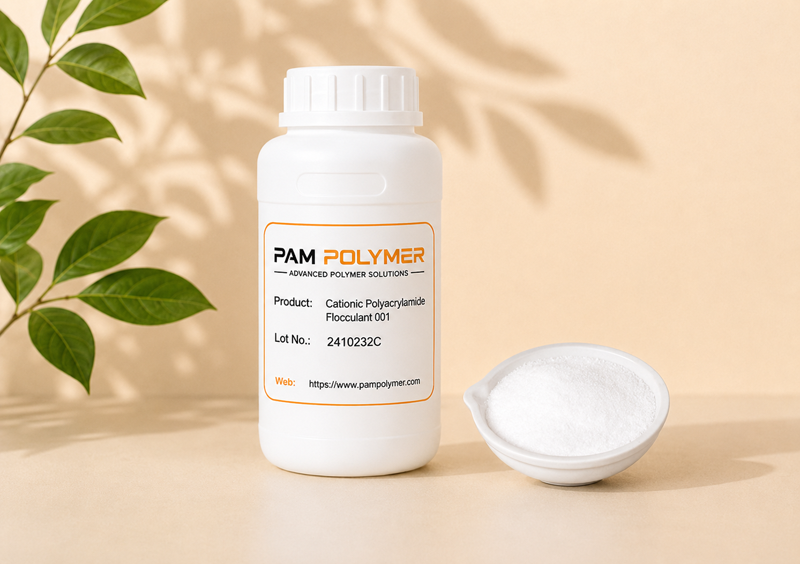
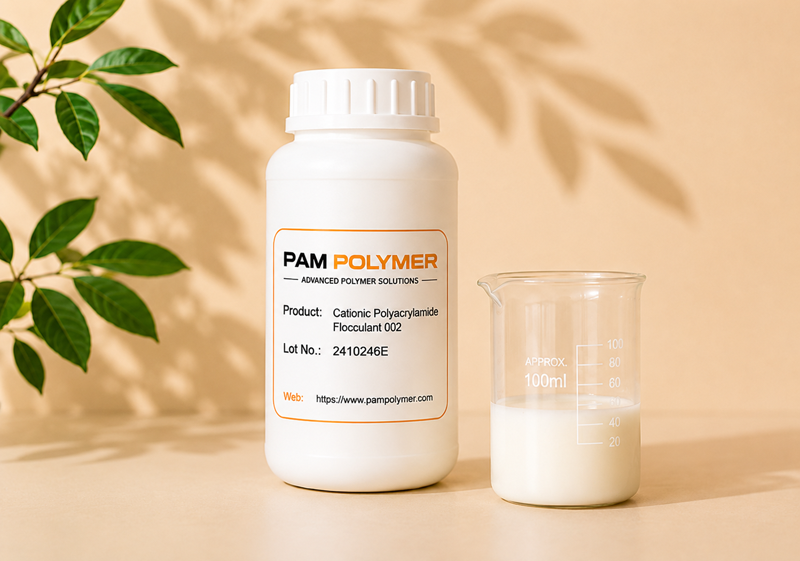


Polyacrylamide is divided into anionic, cationic, and nonionic types, and different models of polyacrylamide have different functions. Anionic polyacrylamide is mainly used for sewage sedimentation tr… Polyacrylamide is divided into anionic, cationic, and nonionic types, and different models of polyacrylamide have different functions. Anionic polyacrylamide is mainly used for sewage sedimentation treatment, cationic for sludge dewatering and sludge cake formation, and nonionic for flocculation sedimentation of complex water quality. This article will analyze the reasons for choosing cationic polyacrylamide for sludge dewatering, and the characteristics and treatment requirements of cationic polyacrylamide in sludge dewatering. Reasons for Choosing Cationic Polyacrylamide for Sludge Dewatering Sludge is an inevitable byproduct in wastewater treatment. First, we should understand the source, nature, composition, and solid content of the sludge. Based on the main components, sludge can be divided into organic sludge and inorganic sludge. Generally, cationic polyacrylamide is used for treating organic sludge, and anionic polyacrylamide is used for treating inorganic sludge. Cationic polyacrylamide is not suitable for strong alkaline conditions, while anionic polyacrylamide is not suitable for strong acidic conditions. When the solid content of the sludge is high, a larger amount of polyacrylamide
Grade: Medium-strong cationic charge
Main use: difficult organic sludge dewatering
Polyacrylamide is divided into anionic, cationic, and nonionic types, and different models of polyacrylamide have different functions. Anionic polyacrylamide is mainly used for sewage sedimentation tr... Polyacrylamide is divided into anionic, cationic, and nonionic types, and different models of polyacrylamide have different functions. Anionic polyacrylamide is mainly used for sewage sedimentation treatment, cationic for sludge dewatering and sludge cake formation, and nonionic for flocculation sedimentation of complex water quality. This article will analyze the reasons for choosing cationic polyacrylamide for sludge dewatering, and the characteristics and treatment requirements of cationic polyacrylamide in sludge dewatering. Reasons for Choosing Cationic Polyacrylamide for Sludge Dewatering Sludge is an inevitable byproduct in wastewater treatment. First, we should understand the source, nature, composition, and solid content of the sludge. Based on the main components, sludge can be divided into organic sludge and inorganic sludge. Generally, cationic polyacrylamide is used for treating organic sludge, and anionic polyacrylamide is used for treating inorganic sludge. Cationic polyacrylamide is not suitable for strong alkaline conditions, while anionic polyacrylamide is not suitable for strong acidic conditions. When the solid content of the sludge is high, a larger amount of polyacrylamide is typically required. Characteristics and Treatment Requirements of Cationic Polyacrylamide in Sludge Dewatering Sludge characteristics Charge properties Particles and colloids in sludge often carry negative charges, and cationic polyacrylamide
| Product Category | Cationic Polyacrylamide Flocculant |
| Formula / Type | Cationic acrylamide copolymer |
| CAS No. | 9003-05-8 |
| Grade | Medium-strong cationic charge |
| Appearance | white powder or emulsion |
| Application | difficult organic sludge dewatering |
| Packaging | 25 kg bags, drums or IBC tanks |
Products | Product Code | Cationic Charge | Molecular Weight |
Cationic PAM Powder | PAMPolymer 605 | Slight | High |
Cationic PAM Powder | PAMPolymer 606 | Slight | Very High |
Cationic PAM Powder | PAMPolymer 610 | Low | High |
Cationic PAM Powder | PAMPolymer 611 | Low | Very High |
Cationic PAM Powder | PAMPolymer 615 | Low | High |
Cationic PAM Powder | PAMPolymer 616 | Low | Very High |
Cationic PAM Powder | PAMPolymer 620 | Low/Medium | High |
Cationic PAM Powder | PAMPolymer 621 | Low/Medium | Very High |
Cationic PAM Powder | PAMPolymer 622 | Low/Medium | Ultra High |
Cationic PAM Powder | PAMPolymer 625 | Low/Medium | High |
Cationic PAM Powder | PAMPolymer 626 | Low/Medium | Very High |
Cationic PAM Powder | PAMPolymer 630 | Medium | High |
Cationic PAM Powder | PAMPolymer 631 | Medium | Very High |
Cationic PAM Powder | PAMPolymer 635 | Medium | High |
Cationic PAM Powder | PAMPolymer 636 | Medium | Very High |
Cationic PAM Powder | PAMPolymer 640 | Medium | High |
Cationic PAM Powder | PAMPolymer 641 | Medium | Very High |
Cationic PAM Powder | PAMPolymer 642 | Medium | Ultra High |
Cationic PAM Powder | PAMPolymer 645 | Medium | High |
Cationic PAM Powder | PAMPolymer 646 | Medium | Very High |
Cationic PAM Powder | PAMPolymer 650 | Medium | High |
Cationic PAM Powder | PAMPolymer 651 | Medium | Very High |
Cationic PAM Powder | PAMPolymer 660 | Medium/Strong | High |
Cationic PAM Powder | PAMPolymer 661 | Medium/Strong | Very High |
Cationic PAM Powder | PAMPolymer 662 | Medium/Strong | Ultra High |
Cationic PAM Powder | PAMPolymer 670 | Strong | High |
Cationic PAM Powder | PAMPolymer 671 | Strong | Very High |
Cationic PAM Powder | PAMPolymer 676 | Strong | Ultra High |
Cationic PAM Powder | PAMPolymer 680 | Very Strong | High |
Cationic PAM Powder | PAMPolymer 681 | Very Strong | Very High |
Cationic PAM Powder | PAMPolymer 691 | Very Strong | Very High |
Cationic PAM Emulsion | PAMPolymer 1209 | Low | High |
Cationic PAM Emulsion | PAMPolymer 1409 | Medium | High |
Cationic PAM Emulsion | PAMPolymer 1509 | Medium/Strong | High |
Cationic PAM Emulsion | PAMPolymer 1809 | Very Strong | High |
Cationic PAM Emulsion | PAMPolymer 260C | Strong | High |
Cationic PAM Emulsion | PAMPolymer 280C | Very Strong | High |
Oil-free Dispersion | PAMPolymer 450W | Medium | High |
Oil-free Dispersion | PAMPolymer 470W | Strong | High |
Polyacrylamide is divided into anionic, cationic, and nonionic types, and different models of polyacrylamide have different functions. Anionic polyacrylamide is mainly used for sewage sedimentation tr...
Polyacrylamide is divided into anionic, cationic, and nonionic types, and different models of polyacrylamide have different functions. Anionic polyacrylamide is mainly used for sewage sedimentation treatment, cationic for sludge dewatering and sludge cake formation, and nonionic for flocculation sedimentation of complex water quality. This article will analyze the reasons for choosing cationic polyacrylamide for sludge dewatering, and the characteristics and treatment requirements of cationic polyacrylamide in sludge dewatering.
Sludge is an inevitable byproduct in wastewater treatment. First, we should understand the source, nature, composition, and solid content of the sludge. Based on the main components, sludge can be divided into organic sludge and inorganic sludge. Generally, cationic polyacrylamide is used for treating organic sludge, and anionic polyacrylamide is used for treating inorganic sludge. Cationic polyacrylamide is not suitable for strong alkaline conditions, while anionic polyacrylamide is not suitable for strong acidic conditions. When the solid content of the sludge is high, a larger amount of polyacrylamide is typically required.
Charge properties
Particles and colloids in sludge often carry negative charges, and cationic polyacrylamide carries positive charges. It can combine with negatively charged particles through charge neutralization, forming larger flocs, which is conducive to subsequent dewatering treatment.
Composition
When sludge is mainly composed of organic matter, the effect of cationic polyacrylamide is usually better. Organic matter often carries more negative charges, and binds strongly to cationic polyacrylamide.
Dewatering efficiency
Cationic polyacrylamide can effectively improve the efficiency of sludge dewatering, reducing the moisture content of the sludge cake. In scenarios where a drier sludge cake is required, such as landfill, incineration, or use as a building material, cationic polyacrylamide is a better choice.
Cost considerations
Although cationic polyacrylamide may be slightly more expensive than anionicPAM, in some cases, its improved dewatering efficiency can significantly reduce subsequent treatment costs, such as reducing transportation costs and lowering incineration energy consumption. Therefore, when considering costs, it is necessary to consider the economic benefits of the entire treatment process comprehensively.
For the sludge to be dewatered, different degrees of ionization of the flocculant can be screened through small experiments to select the most suitable polyacrylamide. This way, the best flocculation effect can be achieved, and the dosage can be minimized, saving costs. The key to selecting the degree of ionization is the size and strength of the flocs.
If the flocs are too small, it will affect the drainage speed; if the flocs are too large, they will trap more water, reducing the dryness of the sludge cake. The size of the flocs can be adjusted by selecting the molecular weight of the polyacrylamide.
The flocs should remain stable and not break under shear forces. Increasing the molecular weight of polyacrylamide or selecting an appropriate molecular structure can help improve floc stability.
Polyacrylamide must fully react with sludge at a certain point in the dewatering equipment to achieve flocculation. Therefore, the viscosity of the polyacrylamide solution must be appropriate, so it can fully mix with the sludge under the existing equipment conditions. Whether the mixture is uniform is a key factor for success.The viscosity of cationic polyacrylamide solution is related to its molecular weight and preparation concentration.
Good dissolution is necessary to fully exert its flocculation effect. Sometimes it is necessary to speed up the dissolution rate; in this case, the concentration of the polyacrylamide solution can be increased.
Send your required grade, application, packaging, quantity and destination port. PAMPolymer will reply with product details and export pricing.



Polyacrylamide is divided into anionic, cationic, and nonionic types, and different models of polyacrylamide have different functions. Anionic polyacrylamide is mainly used for sewage sedimentation tr… Polyacrylamide is divided into anionic, cationic, and nonionic types, and different models of polyacrylamide have different functions. Anionic polyacrylamide is mainly used for sewage sedimentation treatment, cationic for sludge dewatering and sludge cake formation, and nonionic for flocculation sedimentation of complex water quality. This article will analyze the reasons for choosing cationic polyacrylamide for sludge dewatering, and the characteristics and treatment requirements of cationic polyacrylamide in sludge dewatering. Reasons for Choosing Cationic Polyacrylamide for Sludge Dewatering Sludge is an inevitable byproduct in wastewater treatment. First, we should understand the source, nature, composition, and solid content of the sludge. Based on the main components, sludge can be divided into organic sludge and inorganic sludge. Generally, cationic polyacrylamide is used for treating organic sludge, and anionic polyacrylamide is used for treating inorganic sludge. Cationic polyacrylamide is not suitable for strong alkaline conditions, while anionic polyacrylamide is not suitable for strong acidic conditions. When the solid content of the sludge is high, a larger amount of polyacrylamide is typically required. Characteristics and Treatment Requirements of Cationic Polyacrylamide in Sludge Dewatering Sludge characteristics Charge properties Particles and colloids in sludge often carry negative charges, and cationic polyacrylamide carries positive charges. It can combine with negatively charged particles through charge neutralization, forming larger flocs, which is conducive to subsequent dewatering treatment. Composition When sludge is mainly composed of organic matter, the effect of cationic polyacrylamide is usually better. Organic matter often carries more negative charges, and binds strongly to cationic polyacrylamide. Treatment requirements Dewatering efficiency Cationic polyacrylamide can effectively improve the efficiency of sludge dewatering, reducing the moisture content of the sludge cake. In scenarios where a drier sludge cake is required, such as landfill, incineration, or use as a building material, cationic polyacrylamide is a better choice. Cost