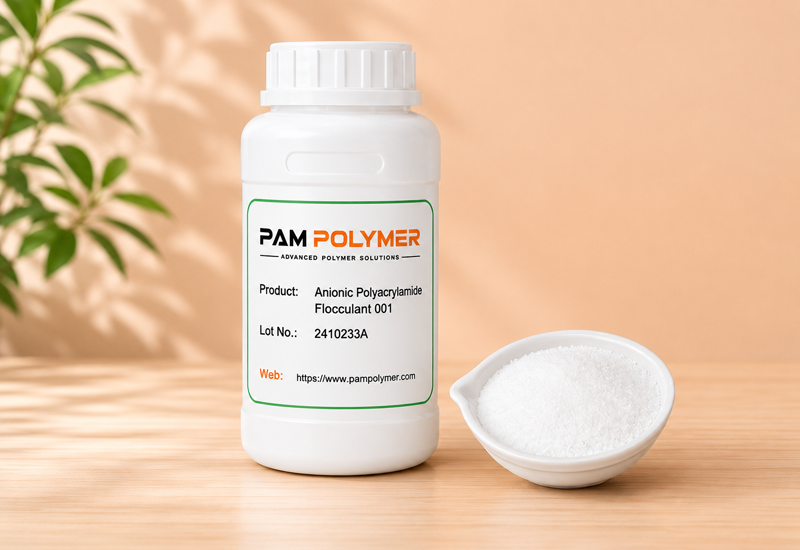
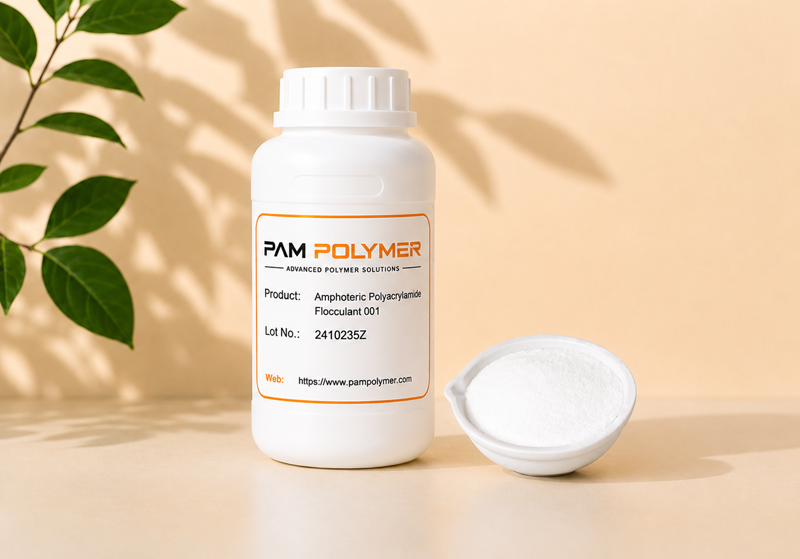
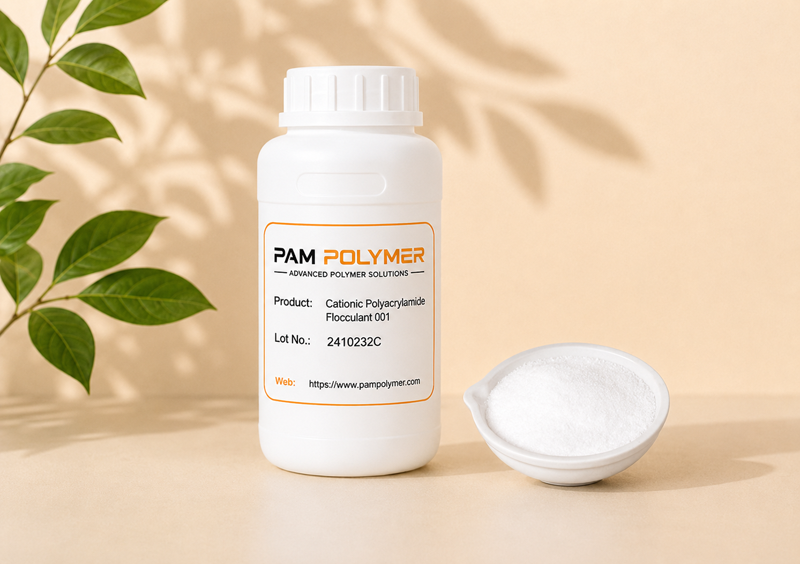
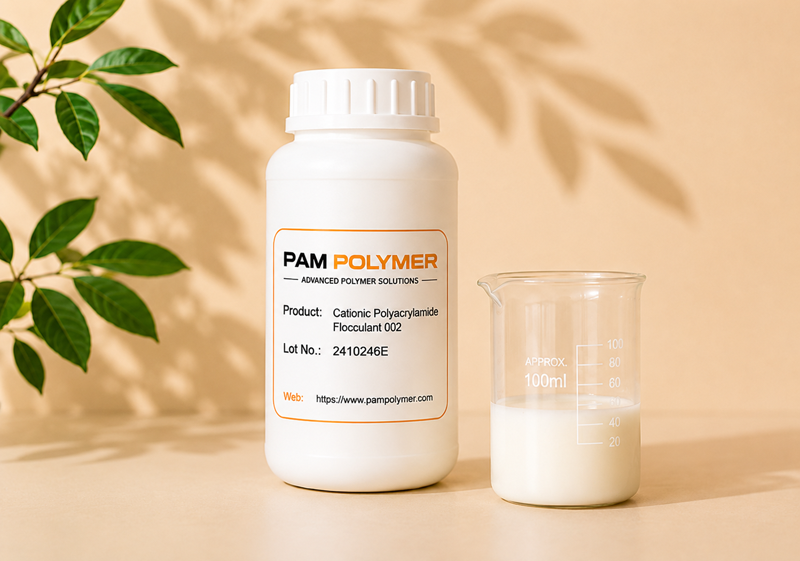


Cationic polyacrylamide can treat various types of wastewater with fast flocculation and sedimentation, and excellent resultsCationic polyacrylamide is mainly used as a flocculant in industrial solid-… Cationic polyacrylamide can treat various types of wastewater with fast flocculation and sedimentation, and excellent results Cationic polyacrylamide is mainly used as a flocculant in industrial solid-liquid separation processes, including sedimentation, clarification, concentration, and sludge dewatering. It is used in various industries, including urban wastewater treatment, papermaking, food processing, petrochemicals, metallurgy, mineral processing, dyeing, sugar production, and wastewater treatment in various other industries. Polyacrylamide (CPAMI) is used to treat sludge precipitation and sludge dewatering in urban wastewater and meat, poultry, and food processing wastewater. Cationic polyacrylamide (CPAM) can be used as a paper dry strength agent, retention agent, and filter aid in the papermaking industry, significantly improving paper quality, saving costs, and increasing the production capacity of paper mills. It can directly form an electrostatic bridge with inorganic salt ions, fibers, and other organic polymers, thereby increasing the physical strength of the paper, reducing fiber or filler loss, accelerating water filtration, and enhancing retention and filtration. It can also be used for whitewater treatment
Grade: Medium cationic charge, very high molecular weight
Main use: papermaking and wastewater flocculation
Cationic polyacrylamide can treat various types of wastewater with fast flocculation and sedimentation, and excellent resultsCationic polyacrylamide is mainly used as a flocculant in industrial solid-... Cationic polyacrylamide can treat various types of wastewater with fast flocculation and sedimentation, and excellent results Cationic polyacrylamide is mainly used as a flocculant in industrial solid-liquid separation processes, including sedimentation, clarification, concentration, and sludge dewatering. It is used in various industries, including urban wastewater treatment, papermaking, food processing, petrochemicals, metallurgy, mineral processing, dyeing, sugar production, and wastewater treatment in various other industries. Polyacrylamide (CPAMI) is used to treat sludge precipitation and sludge dewatering in urban wastewater and meat, poultry, and food processing wastewater. Cationic polyacrylamide (CPAM) can be used as a paper dry strength agent, retention agent, and filter aid in the papermaking industry, significantly improving paper quality, saving costs, and increasing the production capacity of paper mills. It can directly form an electrostatic bridge with inorganic salt ions, fibers, and other organic polymers, thereby increasing the physical strength of the paper, reducing fiber or filler loss, accelerating water filtration, and enhancing retention and filtration. It can also be used for whitewater treatment and has a significant flocculation effect during deinking. It can improve the drainage performance of fiber pulp (asbestos cement products) and improve the strength of asbestos board billets. Cationic
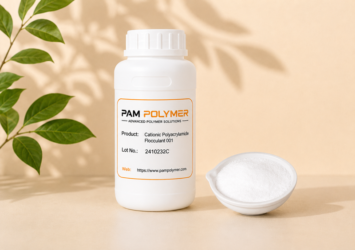
| Product Category | Cationic Polyacrylamide Flocculant |
| Formula / Type | Cationic acrylamide copolymer |
| CAS No. | 9003-05-8 |
| Grade | Medium cationic charge, very high molecular weight |
| Appearance | white powder or emulsion |
| Application | papermaking and wastewater flocculation |
| Packaging | 25 kg bags, drums or IBC tanks |
Products | Product Code | Cationic Charge | Molecular Weight |
Cationic PAM Powder | PAMPolymer 605 | Slight | High |
Cationic PAM Powder | PAMPolymer 606 | Slight | Very High |
Cationic PAM Powder | PAMPolymer 610 | Low | High |
Cationic PAM Powder | PAMPolymer 611 | Low | Very High |
Cationic PAM Powder | PAMPolymer 615 | Low | High |
Cationic PAM Powder | PAMPolymer 616 | Low | Very High |
Cationic PAM Powder | PAMPolymer 620 | Low/Medium | High |
Cationic PAM Powder | PAMPolymer 621 | Low/Medium | Very High |
Cationic PAM Powder | PAMPolymer 622 | Low/Medium | Ultra High |
Cationic PAM Powder | PAMPolymer 625 | Low/Medium | High |
Cationic PAM Powder | PAMPolymer 626 | Low/Medium | Very High |
Cationic PAM Powder | PAMPolymer 630 | Medium | High |
Cationic PAM Powder | PAMPolymer 631 | Medium | Very High |
Cationic PAM Powder | PAMPolymer 635 | Medium | High |
Cationic PAM Powder | PAMPolymer 636 | Medium | Very High |
Cationic PAM Powder | PAMPolymer 640 | Medium | High |
Cationic PAM Powder | PAMPolymer 641 | Medium | Very High |
Cationic PAM Powder | PAMPolymer 642 | Medium | Ultra High |
Cationic PAM Powder | PAMPolymer 645 | Medium | High |
Cationic PAM Powder | PAMPolymer 646 | Medium | Very High |
Cationic PAM Powder | PAMPolymer 650 | Medium | High |
Cationic PAM Powder | PAMPolymer 651 | Medium | Very High |
Cationic PAM Powder | PAMPolymer 660 | Medium/Strong | High |
Cationic PAM Powder | PAMPolymer 661 | Medium/Strong | Very High |
Cationic PAM Powder | PAMPolymer 662 | Medium/Strong | Ultra High |
Cationic PAM Powder | PAMPolymer 670 | Strong | High |
Cationic PAM Powder | PAMPolymer 671 | Strong | Very High |
Cationic PAM Powder | PAMPolymer 676 | Strong | Ultra High |
Cationic PAM Powder | PAMPolymer 680 | Very Strong | High |
Cationic PAM Powder | PAMPolymer 681 | Very Strong | Very High |
Cationic PAM Powder | PAMPolymer 691 | Very Strong | Very High |
Cationic PAM Emulsion | PAMPolymer 1209 | Low | High |
Cationic PAM Emulsion | PAMPolymer 1409 | Medium | High |
Cationic PAM Emulsion | PAMPolymer 1509 | Medium/Strong | High |
Cationic PAM Emulsion | PAMPolymer 1809 | Very Strong | High |
Cationic PAM Emulsion | PAMPolymer 260C | Strong | High |
Cationic PAM Emulsion | PAMPolymer 280C | Very Strong | High |
Oil-free Dispersion | PAMPolymer 450W | Medium | High |
Oil-free Dispersion | PAMPolymer 470W | Strong | High |
Cationic polyacrylamide can treat various types of wastewater with fast flocculation and sedimentation, and excellent resultsCationic polyacrylamide is mainly used as a flocculant in industrial solid-...
Cationic polyacrylamide is mainly used as a flocculant in industrial solid-liquid separation processes, including sedimentation, clarification, concentration, and sludge dewatering. It is used in various industries, including urban wastewater treatment, papermaking, food processing, petrochemicals, metallurgy, mineral processing, dyeing, sugar production, and wastewater treatment in various other industries. Polyacrylamide (CPAMI) is used to treat sludge precipitation and sludge dewatering in urban wastewater and meat, poultry, and food processing wastewater.
Cationic polyacrylamide (CPAM) can be used as a paper dry strength agent, retention agent, and filter aid in the papermaking industry, significantly improving paper quality, saving costs, and increasing the production capacity of paper mills. It can directly form an electrostatic bridge with inorganic salt ions, fibers, and other organic polymers, thereby increasing the physical strength of the paper, reducing fiber or filler loss, accelerating water filtration, and enhancing retention and filtration. It can also be used for whitewater treatment and has a significant flocculation effect during deinking. It can improve the drainage performance of fiber pulp (asbestos cement products) and improve the strength of asbestos board billets. Cationic polyacrylamide can improve the binding ability between additives and fibers.
The molecular chain of polyacrylamide is long, which enables it to bridge between two particles. When aluminum hydroxide is added to a partially hydrolyzed polyacrylamide solution, the anionic point of the polymer is adsorbed onto the cationic point of the aluminum hydroxide, and the viscosity rapidly increases or gels. This is similar to the general flocculation mechanism, that is, one molecule can adsorb several particles at the same time, which pulls them together and quickly settles. The settling rate depends on the concentration of the flocculant and suspended solids. If the amount of flocculant is too much, the adsorption points on the particles will be quickly occupied, which reduces the possibility of bridging and reduces the flocculation efficiency.
It can be used to treat dyeing wastewater, leather wastewater, and oily wastewater to remove turbidity and decolorize and meet discharge standards. In phosphoric acid purification, cationic polyacrylamide assists in the separation of gypsum in wet phosphoric acid processes. It is a water treatment flocculant for water plants that use rivers as their water source. It has a low usage amount, good effect, and low cost. Especially when used in combination with inorganic flocculants, the effect is even better.
Send your required grade, application, packaging, quantity and destination port. PAMPolymer will reply with product details and export pricing.



Cationic polyacrylamide can treat various types of wastewater with fast flocculation and sedimentation, and excellent resultsCationic polyacrylamide is mainly used as a flocculant in industrial solid-… Cationic polyacrylamide can treat various types of wastewater with fast flocculation and sedimentation, and excellent results Cationic polyacrylamide is mainly used as a flocculant in industrial solid-liquid separation processes, including sedimentation, clarification, concentration, and sludge dewatering. It is used in various industries, including urban wastewater treatment, papermaking, food processing, petrochemicals, metallurgy, mineral processing, dyeing, sugar production, and wastewater treatment in various other industries. Polyacrylamide (CPAMI) is used to treat sludge precipitation and sludge dewatering in urban wastewater and meat, poultry, and food processing wastewater. Cationic polyacrylamide (CPAM) can be used as a paper dry strength agent, retention agent, and filter aid in the papermaking industry, significantly improving paper quality, saving costs, and increasing the production capacity of paper mills. It can directly form an electrostatic bridge with inorganic salt ions, fibers, and other organic polymers, thereby increasing the physical strength of the paper, reducing fiber or filler loss, accelerating water filtration, and enhancing retention and filtration. It can also be used for whitewater treatment and has a significant flocculation effect during deinking. It can improve the drainage performance of fiber pulp (asbestos cement products) and improve the strength of asbestos board billets. Cationic polyacrylamide can improve the binding ability between additives and fibers. Cationic polyacrylamide can be used as a clarifying agent for mine and coal washing wastewater in the mining and coal selection industries The molecular chain of polyacrylamide is long, which enables it to bridge between two particles. When aluminum hydroxide is added to a partially hydrolyzed polyacrylamide solution, the anionic point of the polymer is adsorbed onto the cationic point of the aluminum hydroxide, and the viscosity rapidly increases or gels. This is similar to the general flocculation mechanism, that is, one molecule can adsorb several particles at the same time,