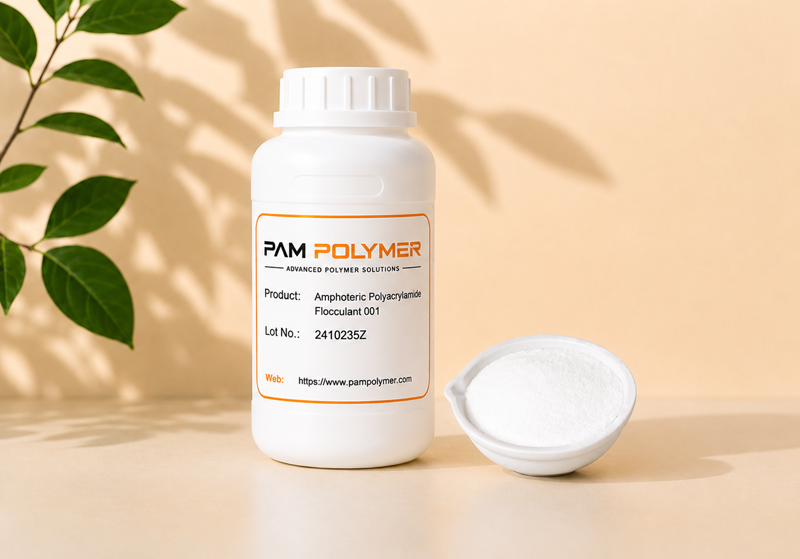


Polyacrylamide is a linear polymer with two forms of product: dry powder and colloid. According to its structure, it is classified as non-ionic, anionic, cationic and amphoteric. With different ionic … Polyacrylamide is a linear polymer with two forms of product: dry powder and colloid. According to its structure, it is classified as non-ionic, anionic, cationic and amphoteric. With different ionic states, what is the role and application of amphoteric polyacrylamide? 1. Amphoteric polyacrylamide used as latest water treatment agent When treating sewage and tap water in many occasions, anionic polyacrylamide and cationic polyacrylamide are used together to produce a more significant and synergistic effect than one polyacrylamide alone. The performance of amphoteric polyacrylamide in reducing surface tension is much greater than that of cation or anion alone under the same conditions. In order to reduce surface tension, it is necessary to use both anionic and cationic polyacrylamides, both of which will produce white precipitates and lose their effectiveness if not used properly. Products with amphoteric characteristics can complete synergy of anion and cation without any precipitates. In complex and changing water quality situations, it is more convenient and effective
Grade: Sludge dewatering grade
Main use: complex industrial and municipal sludge
Polyacrylamide is a linear polymer with two forms of product: dry powder and colloid. According to its structure, it is classified as non-ionic, anionic, cationic and amphoteric. With different ionic ... Polyacrylamide is a linear polymer with two forms of product: dry powder and colloid. According to its structure, it is classified as non-ionic, anionic, cationic and amphoteric. With different ionic states, what is the role and application of amphoteric polyacrylamide? 1. Amphoteric polyacrylamide used as latest water treatment agent When treating sewage and tap water in many occasions, anionic polyacrylamide and cationic polyacrylamide are used together to produce a more significant and synergistic effect than one polyacrylamide alone. The performance of amphoteric polyacrylamide in reducing surface tension is much greater than that of cation or anion alone under the same conditions. In order to reduce surface tension, it is necessary to use both anionic and cationic polyacrylamides, both of which will produce white precipitates and lose their effectiveness if not used properly. Products with amphoteric characteristics can complete synergy of anion and cation without any precipitates. In complex and changing water quality situations, it is more convenient and effective to use amphoteric polyacrylamid as flocculant. 2. Amphoteric polyacrylamide used as sludge dehydrating agent Due to the increasingly complex nature of urban sewage, the requirements for sludge dewatering agent
| Product Category | Amphoteric Polyacrylamide Flocculant |
| Formula / Type | Amphoteric acrylamide copolymer |
| CAS No. | 9003-05-8 |
| Grade | Sludge dewatering grade |
| Appearance | white granular powder |
| Application | complex industrial and municipal sludge |
| Packaging | 25 kg multi-layer bags |
Products | Product Code | Cationic Charge (%) | Anionic Charge (%) | Molecular Weight (Million) |
Amphoteric PAM Powder | PAMPolymer 502 | Low | Medium | High |
Polyacrylamide is a linear polymer with two forms of product: dry powder and colloid. According to its structure, it is classified as non-ionic, anionic, cationic and amphoteric. With different ionic ...
Polyacrylamide is a linear polymer with two forms of product: dry powder and colloid. According to its structure, it is classified as non-ionic, anionic, cationic and amphoteric. With different ionic states, what is the role and application of amphoteric polyacrylamide?
When treating sewage and tap water in many occasions, anionic polyacrylamide and cationic polyacrylamide are used together to produce a more significant and synergistic effect than one polyacrylamide alone. The performance of amphoteric polyacrylamide in reducing surface tension is much greater than that of cation or anion alone under the same conditions. In order to reduce surface tension, it is necessary to use both anionic and cationic polyacrylamides, both of which will produce white precipitates and lose their effectiveness if not used properly. Products with amphoteric characteristics can complete synergy of anion and cation without any precipitates. In complex and changing water quality situations, it is more convenient and effective to use amphoteric polyacrylamid as flocculant.
Due to the increasingly complex nature of urban sewage, the requirements for sludge dewatering agent in sewage treatment are becoming higher. Cationic polyacrylamide is not suitable for some sludge dewatering. Therefore, PAM, an amphoteric sewage dewatering agent, has been developed for this situation. After dehydration test and use in various sludge, it is better than PAM with single ionic property. In particular, amphoteric polyacrylamid has a more prominent effect when used to dewater the sludge from oil refineries and chemical plants.
The effect of amphoteric polyacrylamid is incomparable to polyacrylamide with a single ionic property. It can improve the water filtration speed under the screen, reduce the loss of fiber filler, especially in terms of retention and drainage. It also has a good effect on the wet end system, promoting and compensating for paper smoothness, strength and two-sided difference.
Send your required grade, application, packaging, quantity and destination port. PAMPolymer will reply with product details and export pricing.



Polyacrylamide is a linear polymer with two forms of product: dry powder and colloid. According to its structure, it is classified as non-ionic, anionic, cationic and amphoteric. With different ionic … Polyacrylamide is a linear polymer with two forms of product: dry powder and colloid. According to its structure, it is classified as non-ionic, anionic, cationic and amphoteric. With different ionic states, what is the role and application of amphoteric polyacrylamide? 1. Amphoteric polyacrylamide used as latest water treatment agent When treating sewage and tap water in many occasions, anionic polyacrylamide and cationic polyacrylamide are used together to produce a more significant and synergistic effect than one polyacrylamide alone. The performance of amphoteric polyacrylamide in reducing surface tension is much greater than that of cation or anion alone under the same conditions. In order to reduce surface tension, it is necessary to use both anionic and cationic polyacrylamides, both of which will produce white precipitates and lose their effectiveness if not used properly. Products with amphoteric characteristics can complete synergy of anion and cation without any precipitates. In complex and changing water quality situations, it is more convenient and effective to use amphoteric polyacrylamid as flocculant. 2. Amphoteric polyacrylamide used as sludge dehydrating agent Due to the increasingly complex nature of urban sewage, the requirements for sludge dewatering agent in sewage treatment are becoming higher. Cationic polyacrylamide is not suitable for some sludge dewatering. Therefore, PAM, an amphoteric sewage dewatering agent, has been developed for this situation. After dehydration test and use in various sludge, it is better than PAM with single ionic property. In particular, amphoteric polyacrylamid has a more prominent effect when used to dewater the sludge from oil refineries and chemical plants. 3. Amphoteric polyacrylamide used as a paper chemical in paper industry The effect of amphoteric polyacrylamid is incomparable to polyacrylamide with a single ionic property. It can improve the water filtration speed under the screen,