

PolyDADMAC 90% Solid is a concentrated form of poly(diallyldimethylammonium chloride) for polymer formulations. PolyDADMAC is a water-soluble cationic polymer used as an organic coagulant. Its positively charged groups interact with negatively charged colloidal material, helping destabilize particles before separation. For this solid grade, confirm the supplied product specification and preparation instructions before choosing mixing equipment or a working-solution concentration. The listed solid content alone does not determine solution viscosity, treatment dosage or suitability for a particular water stream. Share your formulation requirements and process conditions so the proposed grade can be evaluated against the intended use.
Grade: 90% solid, low or high viscosity
Main use: concentrated polymer formulations
PolyDADMAC 90% Solid is a concentrated form of poly(diallyldimethylammonium chloride) for polymer formulations. PolyDADMAC is a water-soluble cationic polymer used as an organic coagulant. Its positively charged groups interact with negatively charged colloidal material, helping destabilize particles before separation. For this solid grade, confirm the supplied product specification and preparation instructions before choosing mixing equipment or a working-solution concentration. The listed solid content alone does not determine solution viscosity, treatment dosage or suitability for a particular water stream. Share your formulation requirements and process conditions so the proposed grade can be evaluated against the intended use.
| Product Category | PolyDADMAC |
| Formula / Type | Poly(diallyldimethylammonium chloride) |
| CAS No. | 26062-79-3 |
| Grade | 90% solid, low or high viscosity |
| Appearance | colorless to light-yellow liquid or solid |
| Application | concentrated polymer formulations |
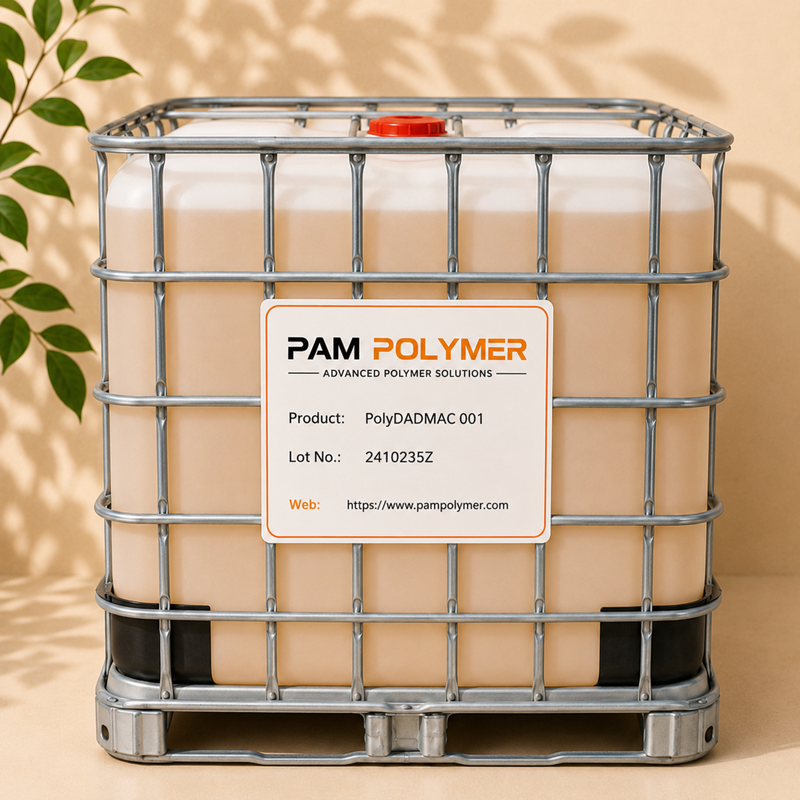
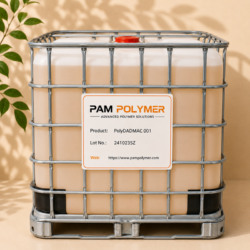
| Packaging | drums, IBC tanks or bags |
Products | Content (%) | Viscosity |
Coagulant, PolyDADMAC | 20% | Low, Medium, High |
Coagulant, PolyDADMAC | 40% | Low, Medium, High |
Coagulant, PolyDADMAC | 90% Solid | Low, High |
PolyDADMAC 90% Solid is a concentrated polymer grade for formulation work. PolyDADMAC is used as an organic coagulant, with cationic groups that interact with negatively charged colloidal material.
The supplied solid and the prepared working solution should be evaluated separately. Confirm the grade specification and certificate of analysis, including solid content and the conditions used to measure solution viscosity.
Select a preparation procedure suitable for the supplied grade and available equipment. Confirm the target solution concentration, mixing requirements and preparation time with the supplier before scaling up.
For water treatment trials, use a representative sample of the actual process water. Evaluate the prepared polymer at suitable trial dosages and mixing conditions, then compare the required clarification or separation result.
For concentrated formulations, check compatibility with the other ingredients and the intended dilution sequence. Record the solution concentration and test temperature when comparing viscosity results between trials.
Send the intended application, required quantity, target working concentration and delivery requirements when requesting a quotation. Confirm the packaging and handling instructions for the supplied solid grade.
Send your required grade, application, packaging, quantity and destination port. PAMPolymer will reply with product details and export pricing.



PolyDADMAC 90% Solid is intended for buyers seeking a concentrated polymer grade for formulation work. Product selection should distinguish the supplied solid from the solution prepared for use: a viscosity value is meaningful only when its test concentration and temperature are stated. Request the grade specification and certificate of analysis to compare solid content and the agreed test methods. Before full-scale use, confirm the preparation procedure, available mixing equipment and target solution concentration with the supplier. Evaluate the prepared polymer in the actual process water or formulation, checking compatibility, mixing and the required separation result. Treatment dosage should be established through representative trials using the intended formulation and process conditions. For an enquiry, provide the required quantity, intended formulation or treatment process, target working concentration and delivery requirements. Packaging and handling details should be confirmed for the supplied solid grade.