Polyacrylamide (PAM) is a water-soluble polymer formed from acrylamide subunits. Its long-chain molecular structure can attract and bridge suspended particles, producing larger flocs that settle, float or dewater more readily. Depending on ionic charge, molecular weight and formulation, PAM can interact with positively charged mineral particles such as clay and sand or negatively charged organic materials found in municipal and industrial wastewater.
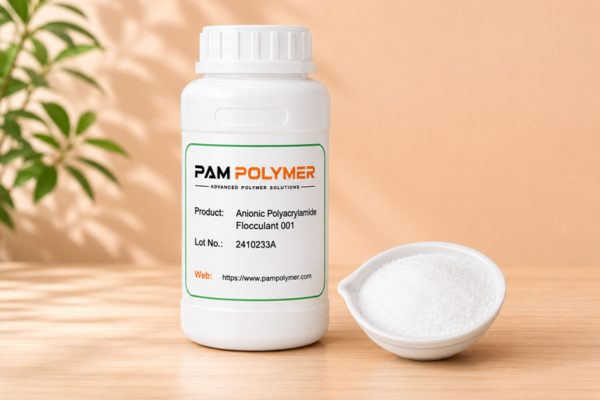
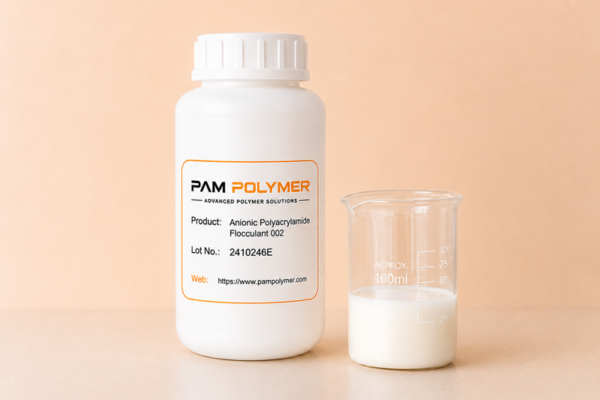
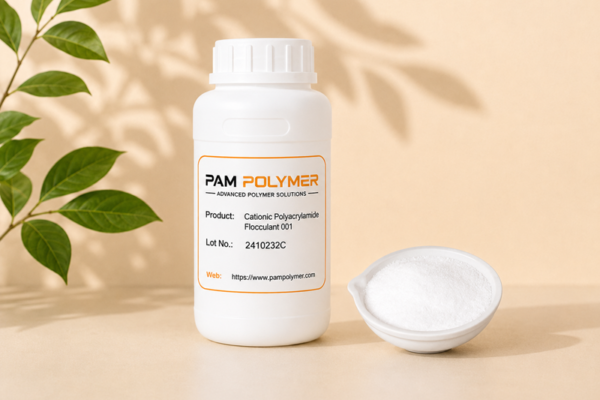
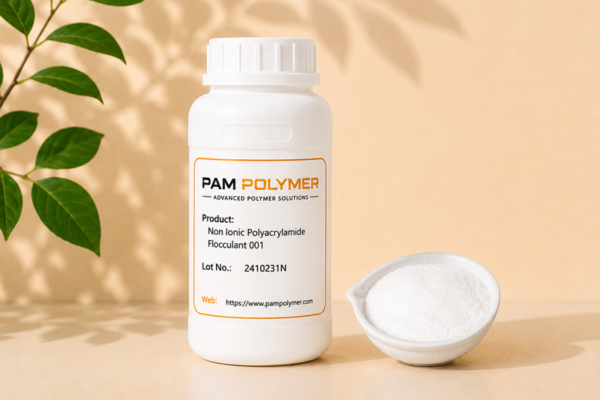
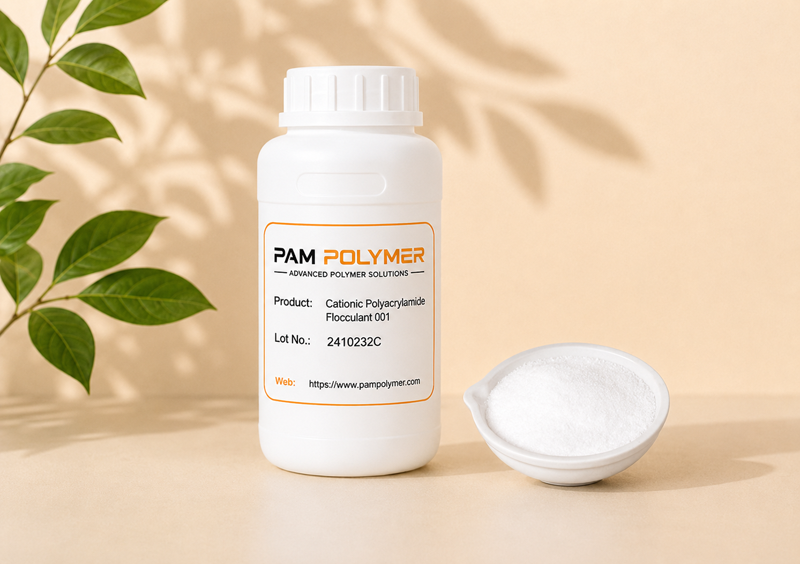
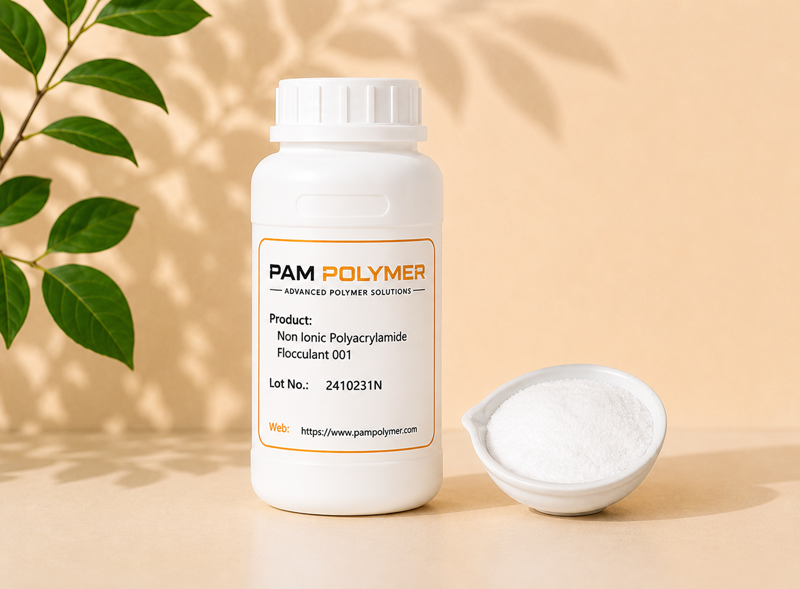
PAM is the common abbreviation for polyacrylamide. The chemical is available in dry powder, emulsion, liquid and tablet form. PAM Polymer supplies three principal ionic families: anionic polyacrylamide (APAM), cationic polyacrylamide (CPAM) and non-ionic polyacrylamide (NPAM). Each family includes multiple charge-density and molecular-weight options for different water, wastewater, soil and industrial process conditions.
PAM chemical compounds are used to flocculate and coagulate suspended solids in water, wastewater and soil. Straight-chain polyacrylamide can also function as a thickener and suspending agent. Correct grade selection requires evaluation of particle charge, pH, salinity, temperature, solids concentration, mixing energy, downstream equipment and the required treated-water or sludge result.