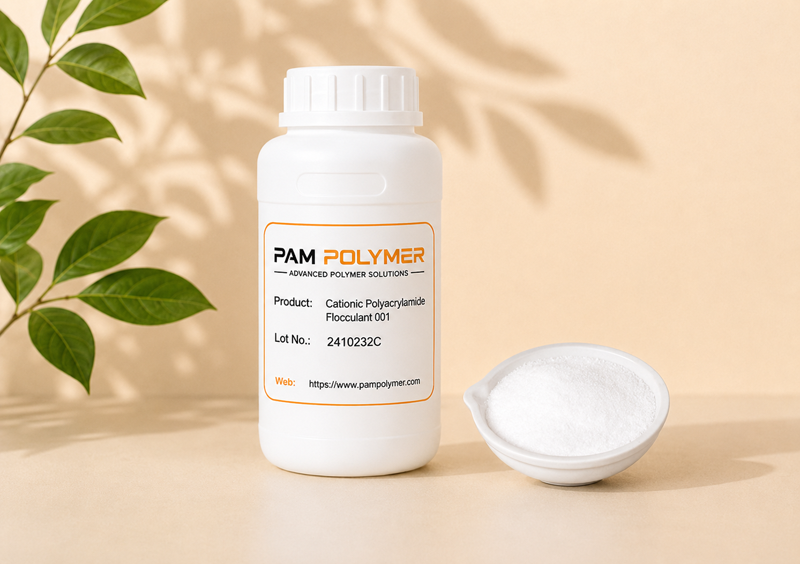
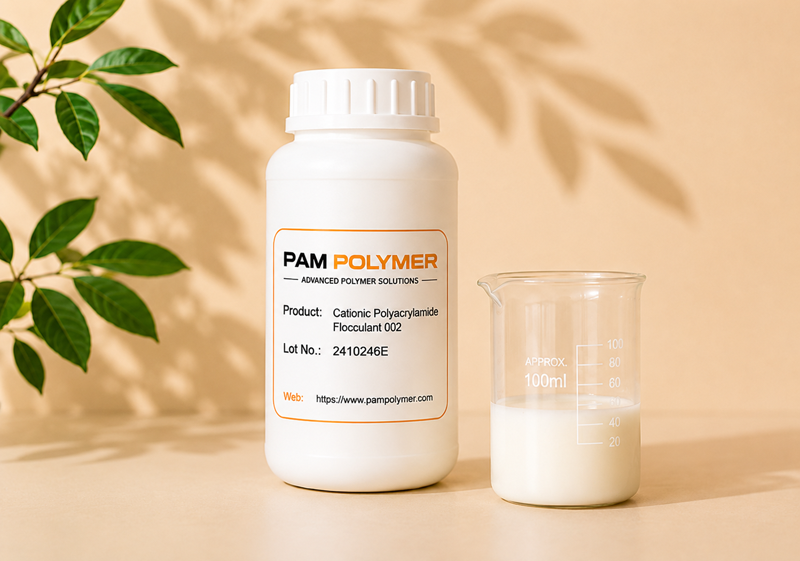


Introduction of cationic polyacrylamideCationic polyacrylamide is a white small particle or powder composed of cationic monomers, acrylamide, and granulated, dried and crushed. The molecular weight of… Introduction of cationic polyacrylamide Cationic polyacrylamide is a white small particle or powder composed of cationic monomers, acrylamide, and granulated, dried and crushed. The molecular weight of cationic polyacrylamide is usually lower than that of anionic or nonionic polymers, and its clarity is mainly obtained through electric neutralization. The main function of polyacrylamide is to flocculate negatively charged colloids, while cationic polyacrylamide has the function of turbidity removal and decolorization. It is suitable for wastewater with high organic colloidal content, such as printing and dyeing, papermaking, food and aquatic product processing, as well as sludge dewatering in urban wastewater treatment processes. The activated sludge treatment method is commonly used in urban and industrial wastewater, while biochemical sludge is often a highly hydrophilic colloid that is difficult to remove moisture from. The use of cationic polyacrylamide flocculants can achieve good dewatering effect. Reasons why cationic polyacrylamide is popular Cationic polyacrylamide is a linear high molecular polymer co-polymerized by ethylene-based cationic monomers and acrylamide, with the
Grade: Slight cationic charge, very high molecular weight
Main use: water treatment and low-charge sludge conditioning
Introduction of cationic polyacrylamideCationic polyacrylamide is a white small particle or powder composed of cationic monomers, acrylamide, and granulated, dried and crushed. The molecular weight of... Introduction of cationic polyacrylamide Cationic polyacrylamide is a white small particle or powder composed of cationic monomers, acrylamide, and granulated, dried and crushed. The molecular weight of cationic polyacrylamide is usually lower than that of anionic or nonionic polymers, and its clarity is mainly obtained through electric neutralization. The main function of polyacrylamide is to flocculate negatively charged colloids, while cationic polyacrylamide has the function of turbidity removal and decolorization. It is suitable for wastewater with high organic colloidal content, such as printing and dyeing, papermaking, food and aquatic product processing, as well as sludge dewatering in urban wastewater treatment processes. The activated sludge treatment method is commonly used in urban and industrial wastewater, while biochemical sludge is often a highly hydrophilic colloid that is difficult to remove moisture from. The use of cationic polyacrylamide flocculants can achieve good dewatering effect. Reasons why cationic polyacrylamide is popular Cationic polyacrylamide is a linear high molecular polymer co-polymerized by ethylene-based cationic monomers and acrylamide, with the English code Polyacrylamide. It is extensively used in various domestic and foreign wastewater treatment plants to remove sludge from wastewater. The large molecular chain of cationic polyacrylamide has a
| Product Category | Cationic Polyacrylamide Flocculant |
| Formula / Type | Cationic acrylamide copolymer |
| CAS No. | 9003-05-8 |
| Grade | Slight cationic charge, very high molecular weight |
| Appearance | white powder or emulsion |
| Application | water treatment and low-charge sludge conditioning |
| Packaging | 25 kg bags, drums or IBC tanks |
Products | Product Code | Cationic Charge | Molecular Weight |
Cationic PAM Powder | PAMPolymer 605 | Slight | High |
Cationic PAM Powder | PAMPolymer 606 | Slight | Very High |
Cationic PAM Powder | PAMPolymer 610 | Low | High |
Cationic PAM Powder | PAMPolymer 611 | Low | Very High |
Cationic PAM Powder | PAMPolymer 615 | Low | High |
Cationic PAM Powder | PAMPolymer 616 | Low | Very High |
Cationic PAM Powder | PAMPolymer 620 | Low/Medium | High |
Cationic PAM Powder | PAMPolymer 621 | Low/Medium | Very High |
Cationic PAM Powder | PAMPolymer 622 | Low/Medium | Ultra High |
Cationic PAM Powder | PAMPolymer 625 | Low/Medium | High |
Cationic PAM Powder | PAMPolymer 626 | Low/Medium | Very High |
Cationic PAM Powder | PAMPolymer 630 | Medium | High |
Cationic PAM Powder | PAMPolymer 631 | Medium | Very High |
Cationic PAM Powder | PAMPolymer 635 | Medium | High |
Cationic PAM Powder | PAMPolymer 636 | Medium | Very High |
Cationic PAM Powder | PAMPolymer 640 | Medium | High |
Cationic PAM Powder | PAMPolymer 641 | Medium | Very High |
Cationic PAM Powder | PAMPolymer 642 | Medium | Ultra High |
Cationic PAM Powder | PAMPolymer 645 | Medium | High |
Cationic PAM Powder | PAMPolymer 646 | Medium | Very High |
Cationic PAM Powder | PAMPolymer 650 | Medium | High |
Cationic PAM Powder | PAMPolymer 651 | Medium | Very High |
Cationic PAM Powder | PAMPolymer 660 | Medium/Strong | High |
Cationic PAM Powder | PAMPolymer 661 | Medium/Strong | Very High |
Cationic PAM Powder | PAMPolymer 662 | Medium/Strong | Ultra High |
Cationic PAM Powder | PAMPolymer 670 | Strong | High |
Cationic PAM Powder | PAMPolymer 671 | Strong | Very High |
Cationic PAM Powder | PAMPolymer 676 | Strong | Ultra High |
Cationic PAM Powder | PAMPolymer 680 | Very Strong | High |
Cationic PAM Powder | PAMPolymer 681 | Very Strong | Very High |
Cationic PAM Powder | PAMPolymer 691 | Very Strong | Very High |
Cationic PAM Emulsion | PAMPolymer 1209 | Low | High |
Cationic PAM Emulsion | PAMPolymer 1409 | Medium | High |
Cationic PAM Emulsion | PAMPolymer 1509 | Medium/Strong | High |
Cationic PAM Emulsion | PAMPolymer 1809 | Very Strong | High |
Cationic PAM Emulsion | PAMPolymer 260C | Strong | High |
Cationic PAM Emulsion | PAMPolymer 280C | Very Strong | High |
Oil-free Dispersion | PAMPolymer 450W | Medium | High |
Oil-free Dispersion | PAMPolymer 470W | Strong | High |
Introduction of cationic polyacrylamideCationic polyacrylamide is a white small particle or powder composed of cationic monomers, acrylamide, and granulated, dried and crushed. The molecular weight of...
Cationic polyacrylamide is a white small particle or powder composed of cationic monomers, acrylamide, and granulated, dried and crushed. The molecular weight of cationic polyacrylamide is usually lower than that of anionic or nonionic polymers, and its clarity is mainly obtained through electric neutralization. The main function of polyacrylamide is to flocculate negatively charged colloids, while cationic polyacrylamide has the function of turbidity removal and decolorization. It is suitable for wastewater with high organic colloidal content, such as printing and dyeing, papermaking, food and aquatic product processing, as well as sludge dewatering in urban wastewater treatment processes. The activated sludge treatment method is commonly used in urban and industrial wastewater, while biochemical sludge is often a highly hydrophilic colloid that is difficult to remove moisture from. The use of cationic polyacrylamide flocculants can achieve good dewatering effect.
Cationic polyacrylamide is a linear high molecular polymer co-polymerized by ethylene-based cationic monomers and acrylamide, with the English code Polyacrylamide. It is extensively used in various domestic and foreign wastewater treatment plants to remove sludge from wastewater. The large molecular chain of cationic polyacrylamide has a high positive charge density, good water solubility, strong flocculation ability, less dosage for wastewater treatment, non-toxic, and non-environmental pollution. The application of cationic polyacrylamide in sludge dewatering is superior to other types of polyacrylamide products. The dosage of cationic polyacrylamide as a flocculant under different raw water turbidity, pH, and temperature was analyzed. The experimental results showed that the optimal dosage of cationic polyacrylamide was 0.3-0.6 mg/L, and the stirring time was 4 minutes. According to the optimal reaction conditions, an experimental study of domestic sewage was conducted for one month, and the results showed that the water content of the sludge cake decreased significantly, which is the reason why cationic polyacrylamide is popular.
For sludge dewatering, the corresponding brand of this product can be selected according to the properties of the sludge, and it can effectively dewater before the sludge enters the pressure filter. When dehydrating, the flocs are large, non-sticking to the filter cloth, and do not disperse during pressure filtration. The mud cake is thick and the dehydration efficiency is high. The water content of the mud cake is less than 80%.
Cationic polyacrylamide flocculants are used for processing domestic and organic wastewater. This product exhibits positive polarity in mixed or alkaline media and can effectively flocculate, sediment, and clarify suspended particles with negative charges in wastewater. Examples include grain alcohol wastewater, papermaking wastewater, urban wastewater treatment plant wastewater, beer wastewater, monosodium glutamate wastewater, sugar-making wastewater, wastewater with high organic matter content, feed wastewater, textile dyeing wastewater, etc.
Send your required grade, application, packaging, quantity and destination port. PAMPolymer will reply with product details and export pricing.



Introduction of cationic polyacrylamideCationic polyacrylamide is a white small particle or powder composed of cationic monomers, acrylamide, and granulated, dried and crushed. The molecular weight of… Introduction of cationic polyacrylamide Cationic polyacrylamide is a white small particle or powder composed of cationic monomers, acrylamide, and granulated, dried and crushed. The molecular weight of cationic polyacrylamide is usually lower than that of anionic or nonionic polymers, and its clarity is mainly obtained through electric neutralization. The main function of polyacrylamide is to flocculate negatively charged colloids, while cationic polyacrylamide has the function of turbidity removal and decolorization. It is suitable for wastewater with high organic colloidal content, such as printing and dyeing, papermaking, food and aquatic product processing, as well as sludge dewatering in urban wastewater treatment processes. The activated sludge treatment method is commonly used in urban and industrial wastewater, while biochemical sludge is often a highly hydrophilic colloid that is difficult to remove moisture from. The use of cationic polyacrylamide flocculants can achieve good dewatering effect. Reasons why cationic polyacrylamide is popular Cationic polyacrylamide is a linear high molecular polymer co-polymerized by ethylene-based cationic monomers and acrylamide, with the English code Polyacrylamide. It is extensively used in various domestic and foreign wastewater treatment plants to remove sludge from wastewater. The large molecular chain of cationic polyacrylamide has a high positive charge density, good water solubility, strong flocculation ability, less dosage for wastewater treatment, non-toxic, and non-environmental pollution. The application of cationic polyacrylamide in sludge dewatering is superior to other types of polyacrylamide products. The dosage of cationic polyacrylamide as a flocculant under different raw water turbidity, pH, and temperature was analyzed. The experimental results showed that the optimal dosage of cationic polyacrylamide was 0.3-0.6 mg/L, and the stirring time was 4 minutes. According to the optimal reaction conditions, an experimental study of domestic sewage was conducted for one month, and the results showed that the water content of the