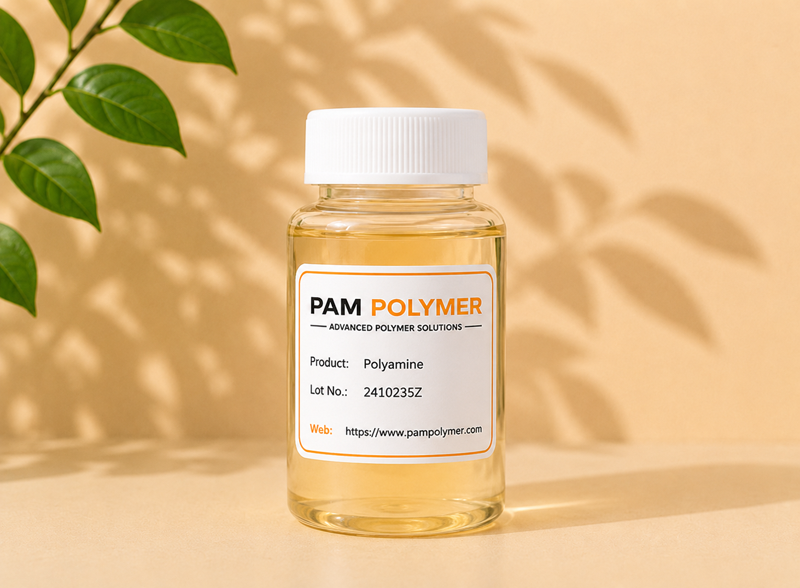
Polyamine Products and Application Guide
Polyamine Product Overview
PAMPolymer cationic polyamine coagulant is a high-efficiency flocculant for wastewater treatment. It works over a wide pH range, reduces turbidity, and lowers chemical costs. An ideal chemical reagent for various industrial applications. PAMPolymer polyamine is liquid, cationic coagulants with different solid contents and viscosities and suitable a wide range of PH. Our products could be used as mixture compatible with polymeric aluminium for waste water treatment of turbid river and tap water and also could be used in wastewater treatment (drinking and wastewater), textiles, cosmetics, mining (coal, gold, diamonds etc.), paper making, soil treatment and oil industries. Our products could work effectively as primary coagulants and charge neutralization agents and could reduce the dosage of inorganic coagulants for turbidity reduction or waste water streams, with good water coagulation and flocculation performance. Polyamine Specifications Products Content (%) Viscosity Coagulants, Polyamine 50% Low, Medium, High Coagulants, Polyamine 50% Low, Medium, High PAMPolymer Polyamine Benefits Suitable for a wide range of PH Could be used alone or in a combination More economical in cost Polyamine Handling Corrosion towards most standard materials of construction
Specifications and Product Selection
is very low. Stainless steel, fiberglass, polyethylene, polypropylene and epoxy coated surfaces are recommended. In some cases aluminium surfaces can be adversely affected. Spilled product is slippery underfoot, very slippery when wet. Shipping and handling of this product can be found in the relevant MSDS. Disposal of product must comply with all national, state and local laws. What Are the Polyamine Uses Polyamines are organic compounds that play essential roles in various biological processes. Here are some common uses and applications of polyamines: Cell Growth and Proliferation: Polyamines, such as spermidine and spermine, are involved in regulating cell growth and division. They play a crucial role in DNA and RNA synthesis, as well as protein synthesis, which are fundamental processes for cell proliferation. Gene Expression and Regulation: Polyamines interact with DNA, RNA, and proteins to influence gene expression. They can affect the structure of chromatin, the complex of DNA and proteins, and modulate the accessibility of genes for transcription, thereby influencing gene regulation. Plant Growth and Development: Polyamines are important for plant growth and development. They regulate various physiological processes,
Applications and Performance
including seed germination, root development, flowering, fruit ripening, and stress responses. Polyamines also help plants withstand environmental stresses such as drought, salinity, and extreme temperatures. Food Preservation: Polyamines have been used as natural food preservatives. They possess antimicrobial properties and can inhibit the growth of spoilage-causing bacteria and fungi. By extending the shelf life of food products, polyamines contribute to food safety and reduce food waste. Pharmaceutical Applications: Polyamines have shown potential therapeutic applications. They have been studied for their roles in cancer treatment, as they are involved in cell proliferation and differentiation. Additionally, polyamines are being investigated for their effects on neurodegenerative diseases, cardiovascular disorders, and inflammation. Industrial Applications: Polyamines are used in various industrial processes. They are employed as additives in the production of paper, textiles, and plastics to improve their performance and properties. Polyamines can also act as dispersants, flocculants, and corrosion inhibitors in industrial applications. Biotechnology and Genetic Engineering: Polyamines play a role in biotechnological applications and genetic engineering. They are used to enhance the efficiency of DNA transformation and improve the stability of recombinant proteins.
Preparation, Handling and Use
Polyamines can also protect DNA and RNA from degradation during laboratory procedures. It’s worth noting that while polyamines have diverse applications, their specific uses may vary depending on the context and industry. Ongoing research continues to uncover new potential applications for these versatile compounds. Application of Polyamine Flocculants for Wastewater Treatment Polyamine flocculants have wide-ranging applications in wastewater treatment. They are used as chemical agents to facilitate the removal of various contaminants and pollutants from wastewater. Here are some key applications of polyamine flocculants in wastewater treatment: Coagulation and Flocculation: Polyamine flocculants are employed to promote coagulation and flocculation in wastewater treatment processes. They aid in destabilizing and aggregating suspended particles, including organic matter, suspended solids, and colloidal particles. This allows the formation of larger flocs that can settle or be filtered more effectively. Solid-Liquid Separation: Polyamine flocculants improve the efficiency of solid-liquid separation processes, such as sedimentation and filtration. By enhancing particle agglomeration, they increase the size and weight of particles, resulting in faster settling rates and improved sedimentation. This facilitates the separation of solids from the liquid phase,
PAMPolymer Supply Information
leading to cleaner water. Turbidity Reduction: Turbidity refers to the cloudiness or haziness of water caused by suspended particles. Polyamine flocculants aid in reducing turbidity by effectively aggregating and settling the suspended particles. This is crucial in industries such as drinking water treatment, where clarity and transparency are essential. Removal of Organic Matter: Polyamine flocculants assist in the removal of organic matter from wastewater. They can bind to dissolved organic compounds, such as oils, greases, proteins, and sugars, facilitating their removal during flocculation. This is particularly important in industrial wastewater treatment, where organic pollutants need to be eliminated. Nutrient Removal: In wastewater treatment, polyamine flocculants can aid in the removal of nutrients, such as phosphorus and nitrogen compounds. These nutrients can contribute to excessive algal growth and eutrophication in receiving water bodies. Polyamine flocculants can help precipitate and remove these nutrients, mitigating environmental impacts. Industrial Applications: Polyamine flocculants find extensive use in various industries, including pulp and paper, mining, chemical processing, and food and beverage production. They assist in the treatment of specific industrial wastewater streams, addressing the unique challenges