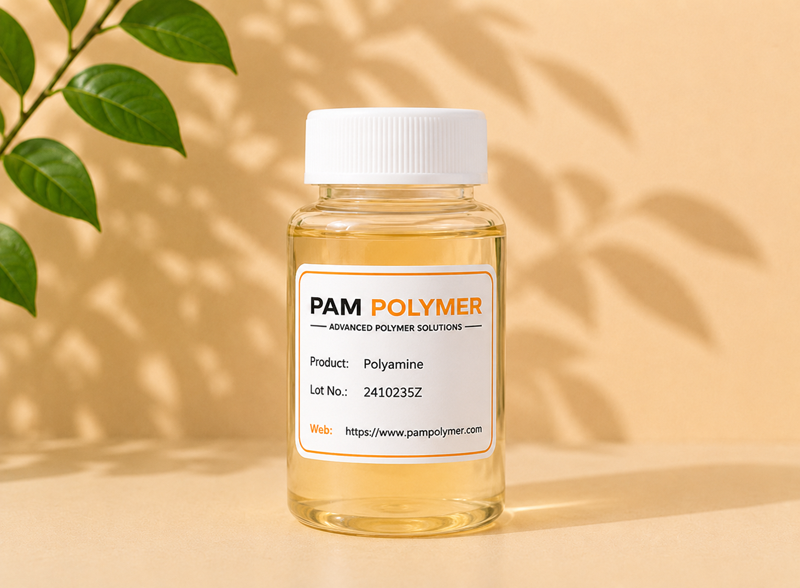


Polyamine 50% Low Viscosity is a liquid cationic coagulant grade for water-treatment evaluation. When considering this grade for a rapid-mixing stage, review the dosing equipment, dilution arrangement and the water to be treated. The low-viscosity designation should be read with the supplier’s specification and test conditions; it does not establish a universal treatment dosage. Compare representative trials using the intended mixing and separation process. Provide water analysis, flow rate and the required outlet quality when requesting grade details.
Grade: 50% content, low viscosity
Main use: rapid mixing and water treatment
Polyamine 50% Low Viscosity is a liquid cationic coagulant grade for water-treatment evaluation. When considering this grade for a rapid-mixing stage, review the dosing equipment, dilution arrangement and the water to be treated. The low-viscosity designation should be read with the supplier's specification and test conditions; it does not establish a universal treatment dosage. Compare representative trials using the intended mixing and separation process. Provide water analysis, flow rate and the required outlet quality when requesting grade details.
| Product Category | Polyamine |
| Formula / Type | Cationic polyamine polymer |
| CAS No. | Confirm against the supplied grade SDS |
| Grade | 50% content, low viscosity |
| Appearance | colorless to light-yellow liquid |
| Application | rapid mixing and water treatment |
| Packaging | drums or IBC tanks |
Products | Content (%) | Viscosity |
Coagulants, Polyamine | 50% | Low, Medium, High |
Coagulants, Polyamine | 50% | Low, Medium, High |
Polyamine 50% Low Viscosity is a liquid cationic coagulant grade for water-treatment evaluation. Review the supplied specification before selecting it for an existing or proposed treatment stage.
The low-viscosity designation should be read with the measurement conditions in the product specification. It does not establish a universal operating pH range, dosage or compatibility with other chemicals.
Assess the grade using representative water samples and the intended mixing and separation procedure. Compare results with the current treatment programme before making a change.
Products | Content (%) | Viscosity |
Coagulants, Polyamine | 50% | Low, Medium, High |
Coagulants, Polyamine | 50% | Low, Medium, High |
Evaluate the operating pH conditions using representative trials.
Confirm compatibility and addition sequence where other chemicals are used.
Assess total operating cost from trial and plant data.
Use the current safety data sheet and supplier handling instructions for the actual grade. Confirm storage conditions, dilution arrangements and equipment material compatibility before use. Do not rely on a generic corrosion claim when selecting contact materials.
Plan the trial around the water stream and treatment objective. The following information helps define a useful comparison.
Sampling point: Identify where the sample is collected within the treatment process.
Source variation: Include water representative of changes in production or source conditions.
Existing chemicals: Record the products and dosages already used at the proposed treatment stage.
Mixing procedure: Keep mixing conditions consistent when comparing candidate dosages.
Separation stage: Identify whether performance will be assessed after settling, filtration or another process.
Measurement plan: Select measurements relevant to the required outlet quality.
Operating records: Retain the dosage, addition sequence and observations for each trial.
Biological functions described for other substances called polyamines do not establish applications for this industrial coagulant grade. Product selection should follow the supplied grade documentation.
Evaluate treatment results at the appropriate stage rather than treating general coagulant properties as a guarantee of final water quality.
Coagulation: Cationic coagulants can help destabilize negatively charged particles; assess the response of the actual water.
Solid-liquid separation: Check performance using the separation equipment and conditions relevant to the proposed process.
Turbidity: Measure the trial outcome against the specified target instead of relying on visual clarity alone.
Organic load: Measure relevant organic parameters where required; improved clarity alone does not establish removal of dissolved contaminants.
Nutrients: Do not infer nitrogen or phosphorus removal from the coagulant designation. Evaluate the requirements of the complete treatment process.
Industrial effluent: Identify the contaminants and production conditions specific to the water stream under review.
Process adjustment: Compare changes to dosage and addition sequence systematically, keeping other trial conditions consistent.
A successful trial informs product selection but does not establish performance across every operating condition. Confirm applicable requirements for discharge, reuse or drinking-water applications separately.
Grade documentation: Request the current specification and safety data sheet for the product being supplied.
Supply enquiry: Confirm packaging, availability and order requirements with the supplier for the intended delivery.
Technical enquiry: Provide water analysis, flow rate, treatment details and trial results so the proposed grade can be reviewed against the application.
Send your required grade, application, packaging, quantity and destination port. PAMPolymer will reply with product details and export pricing.



Polyamine 50% Low Viscosity is a liquid cationic coagulant grade for evaluating a water-treatment process. Review the supplied grade specification and the conditions used to measure viscosity when selecting metering and mixing equipment. Use representative water samples to compare the proposed dosage and addition sequence, especially where the process already uses an inorganic coagulant or a flocculant. Assess results at the intended separation stage and against the required outlet quality. Do not infer an operating pH range, material compatibility or cost saving from the low-viscosity designation. Confirm storage, dilution and handling instructions using the current supplier documentation and safety data sheet for the actual grade. For an enquiry, provide water analysis, flow rate, the existing treatment arrangement and relevant trial results. Applications or biological functions associated with other compounds called polyamines do not establish uses for this industrial coagulant grade.