

Pam polyacrylamide acts as a long molecular chain and connects and parallels particles, molecules, and ions in the solution. Under hydrolysis reaction conditions, the released energy accelerates the r… Pam polyacrylamide acts as a long molecular chain and connects and parallels particles, molecules, and ions in the solution. Under hydrolysis reaction conditions, the released energy accelerates the rotation of particles, thereby achieving flocculation and aggregation, and ultimately achieving the purification effect of water. Pam polyacrylamide is a water-soluble polymer with polar groups such as amide groups. The hydrogen bonds on the surface of sediment particles are easily adsorbed. At the same time, its molecular chain is long. It has a huge adsorption surface area and good flocculation effect in water. The long chain connections between particles form large aggregate bodies, which have flocculation and thickening effects. It is commonly used in industries such as textiles, petroleum, agriculture, and aquaculture. Cationic pam polyacrylamide and polyaluminum chloride are commonly used coagulants in wastewater treatment. Biological granulation fluidized bed promotes coagulation and granulation by adding pam polyacrylamide, and optimizes the effluent quality through the biochemical degradation of particulate sludge. Microorganisms in activated sludge
Grade: Water treatment polymer grade
Main use: flocculant and coagulant polymer manufacture
Pam polyacrylamide acts as a long molecular chain and connects and parallels particles, molecules, and ions in the solution. Under hydrolysis reaction conditions, the released energy accelerates the r... Pam polyacrylamide acts as a long molecular chain and connects and parallels particles, molecules, and ions in the solution. Under hydrolysis reaction conditions, the released energy accelerates the rotation of particles, thereby achieving flocculation and aggregation, and ultimately achieving the purification effect of water. Pam polyacrylamide is a water-soluble polymer with polar groups such as amide groups. The hydrogen bonds on the surface of sediment particles are easily adsorbed. At the same time, its molecular chain is long. It has a huge adsorption surface area and good flocculation effect in water. The long chain connections between particles form large aggregate bodies, which have flocculation and thickening effects. It is commonly used in industries such as textiles, petroleum, agriculture, and aquaculture. Cationic pam polyacrylamide and polyaluminum chloride are commonly used coagulants in wastewater treatment. Biological granulation fluidized bed promotes coagulation and granulation by adding pam polyacrylamide, and optimizes the effluent quality through the biochemical degradation of particulate sludge. Microorganisms in activated sludge are mainly composed of fungi, bacteria, protozoa, and metazoans. Studying the life characteristics of microorganism populations in sludge is of great significance for sewage treatment efficiency. Applications of cationic
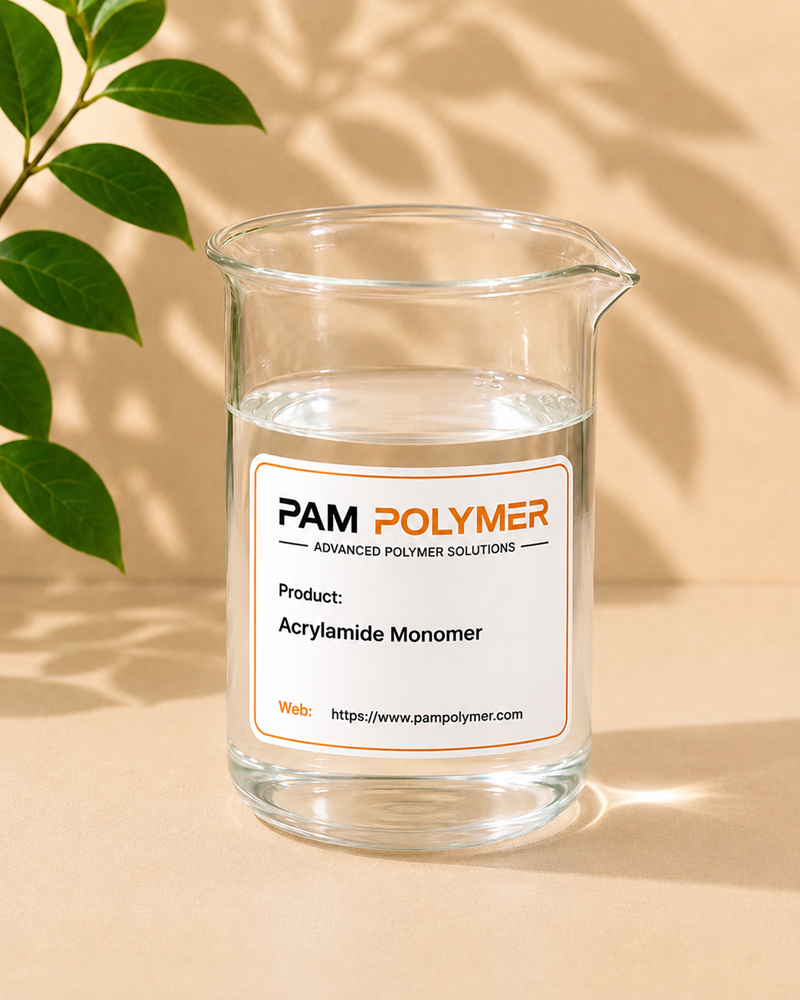
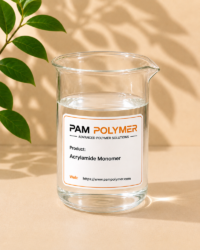
| Product Category | Acrylamide Monomer |
| Formula / Type | C3H5NO |
| CAS No. | 79-06-1 |
| Grade | Water treatment polymer grade |
| Appearance | white crystalline solid or aqueous solution |
| Application | flocculant and coagulant polymer manufacture |
| Packaging | bags, drums or IBC tanks |
Pam polyacrylamide acts as a long molecular chain and connects and parallels particles, molecules, and ions in the solution. Under hydrolysis reaction conditions, the released energy accelerates the r...
Pam polyacrylamide acts as a long molecular chain and connects and parallels particles, molecules, and ions in the solution. Under hydrolysis reaction conditions, the released energy accelerates the rotation of particles, thereby achieving flocculation and aggregation, and ultimately achieving the purification effect of water.
The hydrogen bonds on the surface of sediment particles are easily adsorbed. At the same time, its molecular chain is long. It has a huge adsorption surface area and good flocculation effect in water. The long chain connections between particles form large aggregate bodies, which have flocculation and thickening effects. It is commonly used in industries such as textiles, petroleum, agriculture, and aquaculture. Cationic pam polyacrylamide and polyaluminum chloride are commonly used coagulants in wastewater treatment. Biological granulation fluidized bed promotes coagulation and granulation by adding pam polyacrylamide, and optimizes the effluent quality through the biochemical degradation of particulate sludge. Microorganisms in activated sludge are mainly composed of fungi, bacteria, protozoa, and metazoans. Studying the life characteristics of microorganism populations in sludge is of great significance for sewage treatment efficiency.
Used as a flocculant
It is mainly used in the solid-liquid separation process in industries, including precipitation, clarification, concentration, and sludge dewatering. Cationic dry pam is mainly used in urban sewage treatment, papermaking industry, food processing industry, petrochemical industry, metallurgy, ore dressing, printing and dyeing industry, and various industries' wastewater treatment.
It can be used as a papermaking dry strength agent, retention aid, and filter aid in the papermaking industry.
Cationic pam polyacrylamide can greatly improve the quality of paper, save costs, and improve the production capacity of paper mills. It can directly produce electrostatic bridging effects with inorganic salt ions, fibers, and other organic polymers, thereby enhancing the physical strength of paper during drainage, reducing the loss of fibers or fillers, accelerating water filtration, and enhancing retention and filtration. It can also be used for whitewater treatment.
It can also be used for sludge sedimentation and sludge dewatering in the process of urban sewage and meat, poultry, and food processing wastewater treatment.
By using positively charged groups to neutralize the negatively charged organic colloids in the sludge and the bridging aggregation effect of polymers, colloid particles are caused to aggregate into large flocs and separated from their suspensions. The effect is surface dependent, and the dosage is very small.
In order to dewater sewage, according to the nature and unique flavor of the local accent, corresponding molecular products can be derived, which can effectively carry out pressure and multi-gravity dewatering. During the dewatering process, the dosage is small, the speed is fast, there is little noise, and there is no coagulation effect.
The coagulants used in water treatment plants: The most proud thing is that the use of inorganic coagulants has better effects, and surprisingly, efficient coagulants are irreplaceable in treating the water plant in the mountains and rivers. In fiber mud (asbestos-sensitive soil products), it can improve the drainage performance of asbestos-sensitive soil products and enhance the strength of asbestos slabs; in insulating boards, the bonding ability of additives and fibers can be increased.
Send your required grade, application, packaging, quantity and destination port. PAMPolymer will reply with product details and export pricing.



Pam polyacrylamide acts as a long molecular chain and connects and parallels particles, molecules, and ions in the solution. Under hydrolysis reaction conditions, the released energy accelerates the r… Pam polyacrylamide acts as a long molecular chain and connects and parallels particles, molecules, and ions in the solution. Under hydrolysis reaction conditions, the released energy accelerates the rotation of particles, thereby achieving flocculation and aggregation, and ultimately achieving the purification effect of water. Pam polyacrylamide is a water-soluble polymer with polar groups such as amide groups. The hydrogen bonds on the surface of sediment particles are easily adsorbed. At the same time, its molecular chain is long. It has a huge adsorption surface area and good flocculation effect in water. The long chain connections between particles form large aggregate bodies, which have flocculation and thickening effects. It is commonly used in industries such as textiles, petroleum, agriculture, and aquaculture. Cationic pam polyacrylamide and polyaluminum chloride are commonly used coagulants in wastewater treatment. Biological granulation fluidized bed promotes coagulation and granulation by adding pam polyacrylamide, and optimizes the effluent quality through the biochemical degradation of particulate sludge. Microorganisms in activated sludge are mainly composed of fungi, bacteria, protozoa, and metazoans. Studying the life characteristics of microorganism populations in sludge is of great significance for sewage treatment efficiency. Applications of cationic pam polyacrylamide Used as a flocculant It is mainly used in the solid-liquid separation process in industries, including precipitation, clarification, concentration, and sludge dewatering. Cationic dry pam is mainly used in urban sewage treatment, papermaking industry, food processing industry, petrochemical industry, metallurgy, ore dressing, printing and dyeing industry, and various industries’ wastewater treatment. It can be used as a papermaking dry strength agent, retention aid, and filter aid in the papermaking industry. Cationic pam polyacrylamide can greatly improve the quality of paper, save costs, and improve the production capacity of paper mills. It can directly produce electrostatic bridging effects with inorganic